

543 pages · Printable PDF · Instant download
- Instant downloadYours right after checkout
- Secure checkoutCard (Stripe) or PayPal
- Read anywherePhone, tablet or computer, or print it

Paperback sold separately. As an Amazon Associate I earn from qualifying purchases.
Farsi Conversations Learn the Most Common Words and Phrases Farsi Speakers use Every Day
Farsi Conversations: Learn the Most Common Words and Phrases Farsi Speakers Use Every Day gives 100 short units, each built on one everyday situation, from greetings and ordering food to a doctor’s visit, a job interview and Nowruz. Every dialogue appears twice, in written and in spoken Persian, with transliteration and English, followed by key phrases and exercises. Answers and a glossary are at the back. 543-page PDF by Reza Nazari and Somayeh Nazari.
Read the first 14 pages free (PDF).
Hear the difference between written and spoken Persian in 100 real situations
Many learners know Persian grammar but freeze in a real conversation, partly because Iranians speak differently from how they write. Farsi Conversations shows each dialogue in both forms, so you see that چطور هستی؟ (chetor hasti?, How are you?) becomes چطوری؟ (chetori?) in speech and خوب هستم (khub hastam, I am fine) becomes خوبم (khubam).
The book has 100 units of about four pages each. A unit starts with the conversation in written form, repeats it in spoken form, lists the key phrases, and ends with exercises such as changing written sentences to spoken ones. Every line gives Persian script, a transliteration between slashes and an English translation.
At a glance
What each unit gives you
The units follow everyday life rather than a grammar syllabus, so you can jump to the situation you need.
The conversation in written form
A dialogue between two named speakers in standard written Persian, line by line with transliteration and English.
The same conversation in spoken form
The dialogue rewritten the way Iranians say it, with forms such as میتونی (mituni) for میتوانی (mitavâni, you can).
Key phrases
A summary of the expressions from the unit, so you can review the useful lines without rereading the dialogue.
Exercises
Tasks such as changing phrases to spoken form, writing the Persian for English words like pill, cough and sore throat, and true-or-false questions.
Real situations
At the hairdresser, buying a camera, posting a package, registered mail, a car accident, taking a taxi, booking a flight, recruitment and feeling grief.
Answers and glossary
Answers to the exercises for all 100 units start on page 408, and a glossary follows on page 481.
From the book: written and spoken forms
Unit 1 and the answers to the weather unit show how the same sentence changes from written to spoken Persian:
| Written | Spoken | Pronunciation | English |
|---|---|---|---|
| چطور هستی؟ | چطوری؟ | chetor hasti? / chetori? | How are you? |
| خوب هستم | خوبم | khub hastam / khubam | I am fine |
| هوا چطور است؟ | هوا چطوره؟ | havâ chetor ast? / havâ chetore? | How is the weather? |
| بارانی است | بارونیه | bârâni ast / bâruniye | It is rainy |
| میتوانی | میتونی | mitavâni / mituni | you can |
For more on these changes, read the free guide to spoken vs written Persian.
Contents
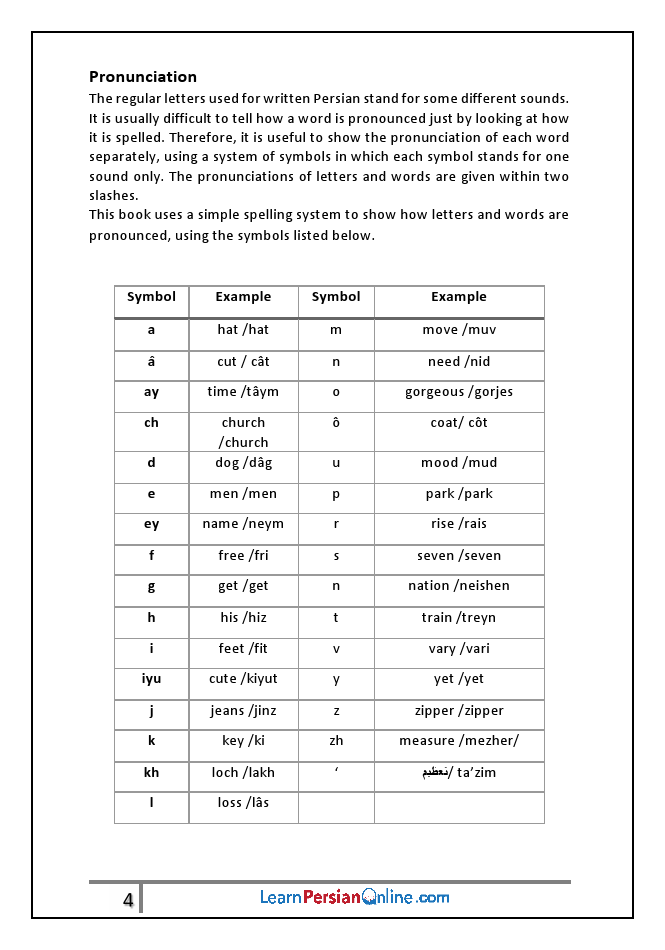
A pronunciation guide, then 100 units grouped here by tens:
- Pronunciation guide
- Units 1 to 10: greeting, saying goodbye, your name, food, the weather, your job, where the subway is, requests
- Units 11 to 20: at the hairdresser, foods you like, shopping, coffee or tea, where you live and are from, at the bus station, animals
- Units 21 to 30: going to a party, dessert, in a restaurant, seeing a doctor, pain, introducing yourself, family, buying a camera
- Units 31 to 40: apology, dinner and lunch invitations, telling the time, weekdays, dates, an exam, house or apartment, posting a package
- Units 41 to 50: this week’s and the weekend’s schedule, vegetables, the cafeteria, a broken leg, addresses, the past tense, in a hotel
- Units 51 to 60: at the store, where you were born, entertainment, colors, computer repair, cleaning the house, friends, illness, holidays
- Units 61 to 70: a haircut, ordering flowers, studying, work, “Can you speak Farsi?”, phone calls and messages, the gym, an accident
- Units 71 to 80: playing, a gift, the post office, registered mail, a software company, music, a taxi, photos, buying a plane ticket, booking
- Units 81 to 90: paying for dinner, a place to live, work problems, recruitment, cooking, an emergency, a store nearby, the cinema, being fired, grief
- Units 91 to 100: emotions, healthy food, ordering food, the menu, Mother’s Day, sleep, planning, the Nowruz ceremony, the library
- Answers (page 408) and glossary (page 481)
How to study with this book
- Read the written form of a dialogue with the transliteration, then cover the English and translate each line yourself.
- Read the spoken form aloud and mark every word that changed from the written version.
- Learn the key phrases list, then do the exercises without looking back at the dialogue.
- Check your answers at the back and act out the spoken dialogue, replacing names, times or places with your own.
- Pick units by the situation you face next, such as a doctor’s visit or a hotel stay, rather than strictly in order.
Who this book is for
A good fit if you
- know basic Persian grammar but have had little chance to talk with native speakers
- want to understand the spoken Persian you hear in everyday conversation
- like learning phrases in full dialogues with transliteration and English
- want practice material for specific situations such as travel, work or health
Look elsewhere if you
- are starting from zero and need the alphabet and first grammar; begin with Learn to Speak Persian Fast: For Beginners
- want grammar rules explained step by step; Farsi Grammar in Use: For Beginners covers that
Use it with
- Farsi conversation lessons: free online dialogues to practice between units.
- 1000 Most Common Farsi Phrases: short phrases to drill once you know the situations.
- Easy Persian Phrasebook: a quick reference to carry when you travel.
Common questions
What level is it for?
It is written for learners who already know basic to intermediate Persian and want speaking practice. Because every line has transliteration and English, an advanced beginner can also use it.
Does it teach spoken or written Persian?
Both. Each dialogue is printed in written form and again in spoken form, and many exercises ask you to turn written phrases into spoken ones.
Is it Iranian Persian?
Yes. The spoken forms are those used in Iran, not Dari or Tajik.
Is there an answer key?
Yes. Answers for all 100 units are collected at the back, before the glossary.
What do I get after I buy?
A 543-page PDF you can download right after checkout and read on a phone, tablet or computer, or print.
Is there a paperback?
Yes, a paperback edition is sold on Amazon. The PDF here is the digital edition.
Related Persian books
More Persian learning books on similar topics.
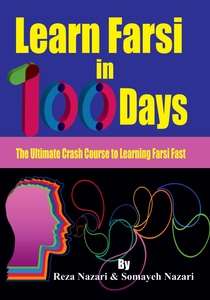 Learn Farsi in 100 Days: Book + Workbook (2 PDF Ebooks)
$18.74Black Friday


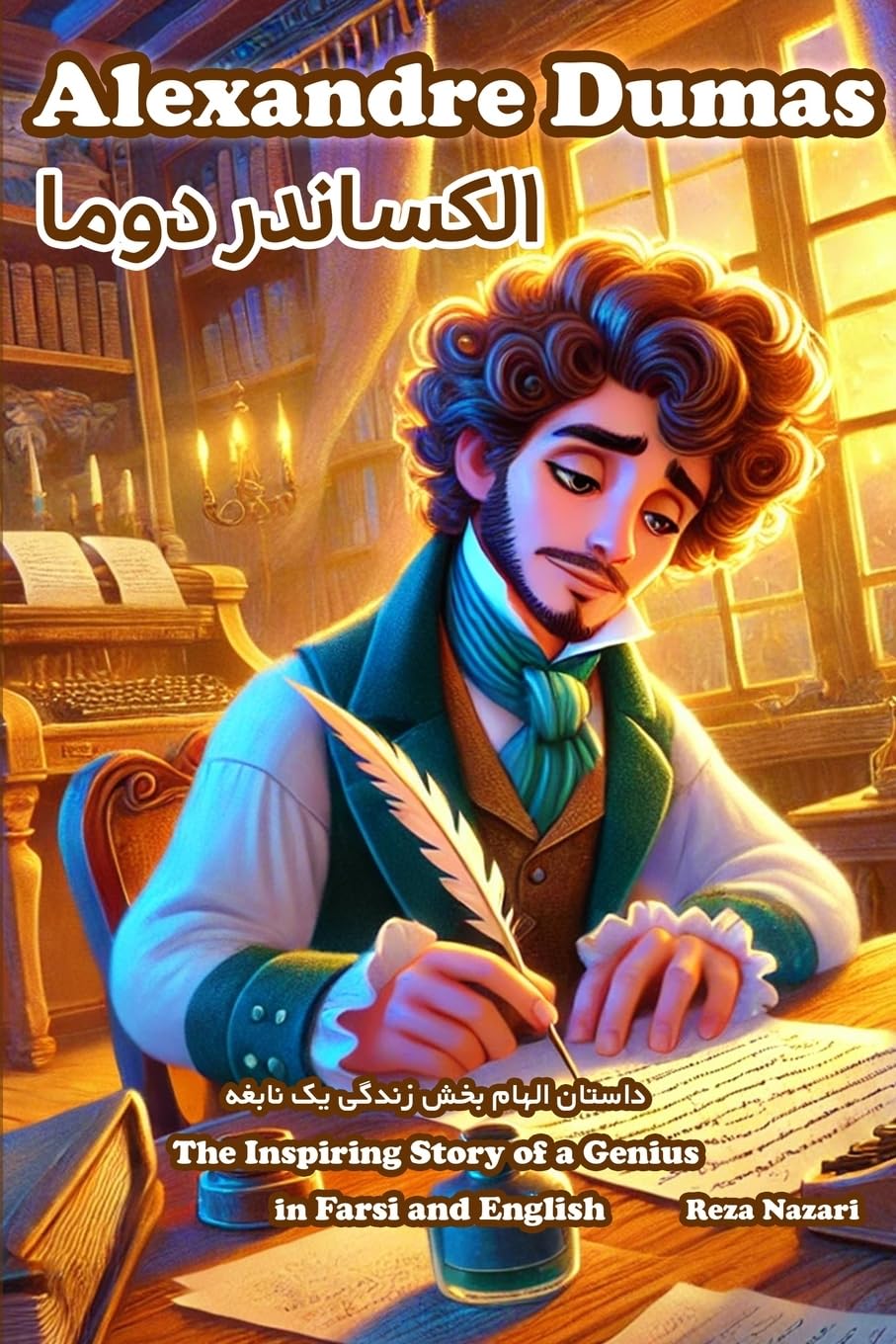 Alexandre Dumas: The Inspiring Story of a Genius in Farsi and English
$9.74Black Friday







What do you think about "Farsi Conversations" book?
You must be logged in to post a review.
Product Reviews
There are no reviews yet.