10 Tips to Learn the Persian Language Fast

The fastest way to learn Persian (Farsi) is to study a little every day, learn the 32-letter alphabet in your first weeks, learn words inside whole phrases, listen daily and start speaking early. Persian grammar is regular: there is no grammatical gender, one set of verb endings and subject-object-verb word order. That frees most of your time for vocabulary, listening and speaking.
Below are ten tips that work for adult learners, each with a concrete way to apply it this week. If you want a full plan by month, read our step-by-step roadmap for learning Persian.
The 10 tips at a glance
- Learn phrases, not single words.
- Learn the alphabet in your first two weeks.
- Learn the core grammar quickly, then move on.
- Listen to Persian every day.
- Learn spoken Persian alongside written Persian.
- Review on a schedule.
- Stop translating word for word.
- Learn the most common words first.
- Write a few sentences every day.
- Use Persian in real situations and accept mistakes.
1. Learn phrases, not single words
A word on its own is hard to use. A phrase gives you the word, its grammar and a situation in one package. Instead of memorizing حال (hâl, “state”), learn the whole question it lives in:
| Persian | Pronunciation | English |
|---|---|---|
| حال شما چطور است؟ | hâl-e shomâ chetor ast? | How are you? (formal) |
| خیلی ممنون | kheyli mamnun | Thank you very much |
| ببخشید | bebakhshid | Excuse me / Sorry |
| اسم من سارا است | esm-e man Sârâ ast | My name is Sara. |
| من فارسی یاد میگیرم | man fârsi yâd migiram | I am learning Persian. |
Our free Persian conversation lessons teach exactly this way: short dialogues you can reuse, with every line transliterated and translated.
2. Learn the alphabet in your first two weeks
The Persian alphabet has 32 letters and is written from right to left. It is the Arabic script plus four letters for sounds Arabic lacks: پ (p), چ (ch), ژ (zh) and گ (g). Most letters change shape depending on their position in a word, and short vowels are usually not written, so کتاب (ketâb, “book”) is written with only the consonants and the long â.
Learning the script early pays off quickly: you can read signs, menus and subtitles, use real textbooks and stop depending on transliteration, which every source writes differently. Start with the Farsi alphabet lessons, then test yourself with the Persian alphabet quiz. To practice typing, use the free online Persian keyboard.
3. Learn the core grammar quickly, then move on
Grammar should support your speaking, not replace it. If you think about rules while you talk, you will speak slowly. Learn the basics, review them briefly and let examples do the rest. The core of Persian grammar fits on one page:
- No grammatical gender. او (u) means both “he” and “she”.
- Verb at the end. من چای میخورم (man chây mikhoram) is literally “I tea drink.”
- One set of personal endings: -am, -i, -ad, -im, -id, -and, for almost every verb.
- The ezâfe links words: کتاب من (ketâb-e man, “my book”).
Our overview of Persian grammar for beginners covers each rule with examples, and the Persian verb conjugator shows the full conjugation of more than 200 verbs.
4. Listen to Persian every day
Listening is how you learn pronunciation, rhythm and the spoken forms that textbooks skip. Aim for at least 10 minutes of focused listening five or more days a week. Choose material slightly above your level: beginner dialogues first, then slow podcasts, then Iranian films and TV with Persian subtitles. Listen once for the gist, a second time with the transcript, and a third time while repeating aloud (shadowing).
5. Learn spoken Persian alongside written Persian
This tip matters more in Persian than in most languages. Iranians write in a formal register and speak in a colloquial one, and the differences are regular. If you only learn the written forms, you will sound like a news anchor and struggle to understand friends.
| Written | Spoken | English |
|---|---|---|
| میروم (miravam) | میرم (miram) | I go |
| خانه (khâne) | خونه (khune) | house, home |
| نان (nân) | نون (nun) | bread |
| او کجاست؟ (u kojâst?) | اون کجاست؟ (un kojâst?) | Where is he/she? |
A useful pattern: in Tehran speech, “ân” before n or m often becomes “un” (khâne becomes khune, nân becomes nun). Learn both forms of each new word from the start.
6. Review on a schedule
New words fade within days unless you see them again. Review each lesson the next day, three days later, a week later and a month later. Flashcard apps with spaced repetition do this timing for you. Learners who move fastest are not the ones who study longest in one sitting, but the ones who study and review every day.
7. Stop translating word for word
Translating every sentence into your own language doubles the work and often gives nonsense. Persian expressions carry meaning as a whole. دستت درد نکنه (dastet dard nakone) is literally “may your hand not hurt,” but Iranians use it to say “thank you” for something someone did for you. Learn such phrases as units, together with the situation where they are used.
8. Learn the most common words first
Everyday conversation uses a fairly small set of words over and over. A few hundred very frequent words (pronouns, question words, basic verbs such as بودن (budan, “to be”), داشتن (dâshtan, “to have”) and رفتن (raftan, “to go”), numbers and time expressions) cover a large share of what you hear. Work through our list of the most common Persian words before you spend time on specialized vocabulary.

9. Write a few sentences every day
Pick a topic (your day, your family, your plans) and write three to five sentences in Persian script. Writing forces you to recall words and spelling, which fixes them in memory. Do not worry about mistakes. If you can, ask a Persian speaker or a tutor to correct your text once a week, and rewrite it with the corrections.
10. Use Persian in real situations and accept mistakes
The biggest barrier for most adult learners is fear of sounding wrong. Children are not afraid to make mistakes, which is one reason they seem to pick up languages easily. Speak from your first weeks, even if it is only greetings. Work on all four skills (listening, reading, writing and speaking) because they support one another: someone who only drills speaking runs out of words, and someone who only reads cannot follow a conversation.
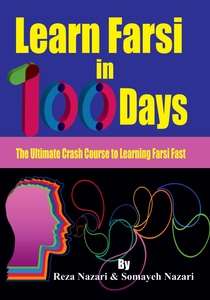
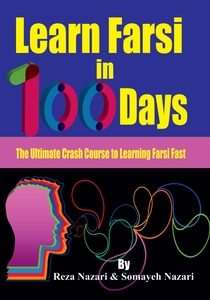
If you do not live near Persian speakers, create real situations online: follow Persian news, comment in Persian on social media, join a language exchange or book sessions with a tutor. Our structured Learn Farsi in 100 Days course gives you a daily lesson to build those conversations on.
Farsi language kaise sikhe? Tips for Hindi and Urdu speakers
Many searches for this page come from India and Pakistan. The tips above apply to you too, and you have a head start: Hindi and Urdu borrowed hundreds of Persian words, and Urdu is written in a script very close to Persian, so Urdu readers already know most Persian letters.
फारसी भाषा कैसे सीखें: पहले वर्णमाला सीखें, रोज़ थोड़ा सुनें, और पूरे वाक्य याद करें।
| Persian | Pronunciation | Hindi / Urdu | English |
|---|---|---|---|
| دوست | dust | dost | friend |
| دنیا | donyâ | duniyâ | world |
| زمین | zamin | zamin | earth, land |
| شهر | shahr | shahar | city |
| آسمان | âsemân | âsmân | sky |
| درد | dard | dard | pain |
Watch out for false friends and pronunciation differences: Persian has no retroflex t and d, and words borrowed into Hindi or Urdu sometimes shifted meaning.
Check what you learned about learning Persian faster.
1. How many letters does the Persian alphabet have?
2. Which of these letters is in Persian but not in the Arabic alphabet?
3. What is the spoken (colloquial) form of میروم (miravam, “I go”)?
4. Where does the verb usually go in a Persian sentence?
5. What does دستت درد نکنه (dastet dard nakone) mean in use?
6. What does the Persian pronoun او (u) mean?
Answer key with explanations
- A. 32: Persian uses 32 letters: the Arabic letters plus پ, چ, ژ and گ.
- C. گ: گ (g) is one of the four letters Persian added, along with پ, چ and ژ.
- B. میرم (miram): In everyday speech miravam becomes miram.
- D. At the end: Persian is subject-object-verb: man chây mikhoram, “I tea drink.”
- C. Thank you (for something you did): Literally “may your hand not hurt,” it is used to thank someone for their effort.
- B. He or she: Persian has no grammatical gender, so او covers both he and she.


Common questions
How can I learn the Persian language fast?
Study every day in short sessions, learn the alphabet in the first two weeks, learn phrases rather than single words, listen daily and speak from the start. Learn the colloquial forms of words together with the written ones.
How long does it take to learn Persian?
It depends on your goal and weekly time. Basic travel Persian takes a few months of regular study. The US Foreign Service Institute plans about 44 weeks of full-time training (around 1,100 class hours) for English speakers to reach professional working proficiency. See how many hours a week to study Persian for realistic schedules.
Can I learn Persian by myself?
Yes. Free lessons, audio and quizzes cover the alphabet, grammar and vocabulary. You will make faster progress in speaking if you add regular conversation practice with a native speaker or tutor.
Is Persian hard to learn for English speakers?
Persian grammar is easier than many European languages: no gender, regular verb endings and no case endings. The main challenges are the script, where short vowels are not written, and the gap between written and spoken Persian.
Learn Persian with our bestseller
Serious about Persian? Get all 30 of our Persian learning books for $149.00 (55% less than buying them one by one).
Free Persian Starter Kit (PDF)
The Persian alphabet chart and the 101 most common Persian words with pronunciation, in one printable PDF. You also get a one-time 15% code for any of our books.
We will email you new lessons and book news from Learn Persian Online. Unsubscribe any time.Free Persian Starter Pack: Alphabet + 100 Core Words
Get the 14-page printable Starter Pack (all 32 letters, a 7-day reading plan, 100 core words and 20 survival phrases) and a short 5-email course. Free.
by: Reza about (category: Blog)

Reza is an experienced Persian instructor who has been tutoring students since 2008. He is the founder of Learn Persian Online, a tutoring company that has helped many students learn Persian, this beautiful language. He works with students individually and in group settings, he tutors both live and online Persian courses. Reza provides an individualized custom learning plan and the personalized attention that makes a difference in how people view Persian learning process.



What people say about "Top 10 Tips to Learn Persian (Farsi) Language Fast"?
No one replied yet.