
To help you choose where to go on your next trip to Iran, we compiled a list of best destinations in Iran using opinions and recommendations from trusted travel experts and many of travelers. We hope these recommendations can help point you toward your next destination in Iran.
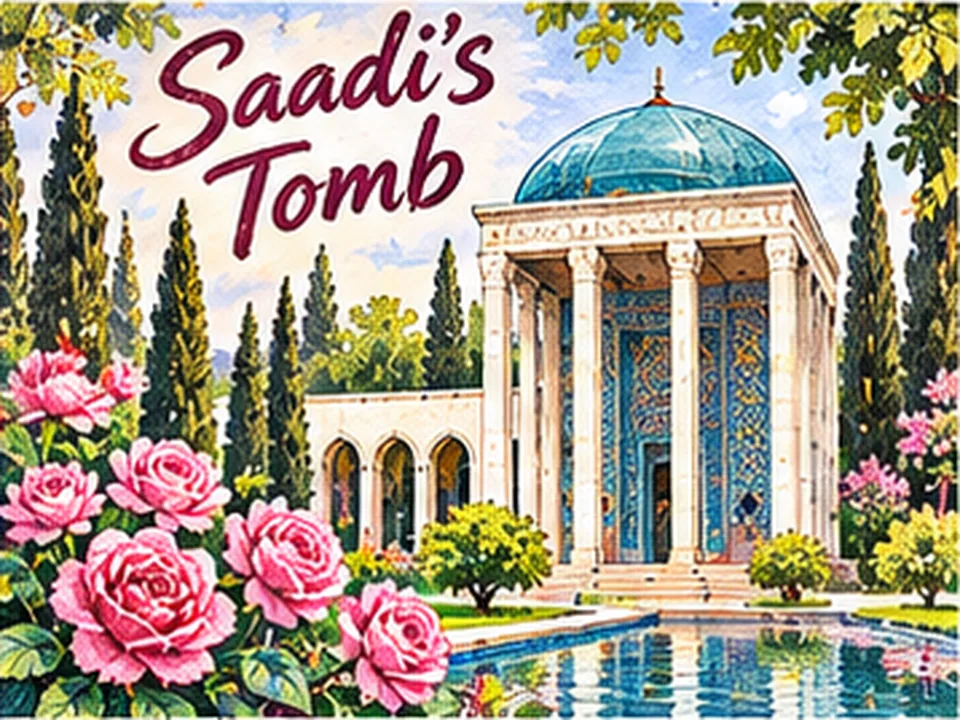
9- Saadi Tomb (Saadieh, سعدیه)
Saadi, was one of the major Persian poets of the medieval period. He is not only famous in Persian-speaking countries, but has also been quoted in western sources. He is recognized for the quality of his writings and for the depth of his social and moral thoughts. Saadi is widely recognized as one of the most prominent and greatest poets of the classical literary tradition.

Visiting Saadi's tomb in Shiraz? Learn the key Persian words, useful phrases, a short reading about Saadi with translation, and his famous couplet.
Saadi's tomb in Persian: words and a reading for visitors
The tomb of the poet Saadi, سعدی (sa'di), stands in a garden in Shiraz and is known in Persian as سعدیه (sa'diye) or آرامگاه سعدی (ârâmgâh-e sa'di). Saadi lived in the thirteenth century and is one of the greatest poets of the Persian language. His two most famous books are the گلستان (golestân), "The Rose Garden", written in prose mixed with verse, and the بوستان (bustân), "The Orchard", written in verse. This page gives you vocabulary and phrases for a visit and a short reading about the poet.
Vocabulary for your visit
| Persian | Pronunciation | English |
|---|---|---|
| آرامگاه | /ârâmgâh/ | tomb, mausoleum |
| شاعر | /shâ'er/ | poet |
| شعر | /she'r/ | poem, poetry |
| بیت | /beyt/ | couplet |
| باغ | /bâgh/ | garden |
| حوض | /howz/ | pool (in a garden or courtyard) |
| سنگ قبر | /sang-e ghabr/ | gravestone |
| کتیبه | /katibe/ | inscription |
| دیوان | /divân/ | collected poems |
| گلستان | /golestân/ | rose garden; Saadi's Golestan |
| بوستان | /bustân/ | orchard; Saadi's Bustan |
Useful phrases
| Persian | Pronunciation | English |
|---|---|---|
| آرامگاه سعدی کجاست؟ | /ârâmgâh-e sa'di kojâst?/ | Where is Saadi's tomb? |
| این شعر مال سعدیه؟ | /in she'r mâl-e sa'diye?/ | Is this poem by Saadi? |
| میشه این بیت رو برام بخونید؟ | /mishe in beyt ro barâm bekhunid?/ | Could you read this couplet for me? |
| معنی این شعر چیه؟ | /ma'ni-ye in she'r chiye?/ | What does this poem mean? |
| آرامگاه حافظ هم در شیرازه؟ | /ârâmgâh-e hâfez ham dar shirâze?/ | Is Hafez's tomb in Shiraz too? |
Reading: Saadi of Shiraz
| Persian | Pronunciation | English |
|---|---|---|
| سعدی یکی از بزرگترین شاعران زبان فارسی است. | /sa'di yeki az bozorgtarin shâ'erân-e zabân-e fârsi ast./ | Saadi is one of the greatest poets of the Persian language. |
| او در قرن هفتم هجری، یعنی قرن سیزدهم میلادی، زندگی میکرد. | /u dar gharn-e haftom-e hejri, ya'ni gharn-e sizdahom-e milâdi, zendegi mikard./ | He lived in the seventh century AH, that is, the thirteenth century AD. |
| سعدی در شیراز به دنیا آمد و آرامگاهش هم در همین شهر است. | /sa'di dar shirâz be donyâ âmad va ârâmgâhash ham dar hamin shahr ast./ | Saadi was born in Shiraz, and his tomb is also in this city. |
| مشهورترین کتابهای او گلستان و بوستان است. | /mashhurtarin ketâb-hâ-ye u golestân va bustân ast./ | His most famous books are the Golestan and the Bustan. |
| بسیاری از ایرانیان بیتهایی از سعدی را از حفظ میدانند. | /besyâri az irâniyân beyt-hâyi az sa'di râ az hefz midânand./ | Many Iranians know couplets by Saadi by heart. |
In the last line, از حفظ دانستن (az hefz dânestan) means "to know by heart". Memorizing poetry is common in Iran, and you may well hear visitors at the tomb reciting lines from Saadi. Notice also به دنیا آمدن (be donyâ âmadan), literally "to come into the world", the everyday expression for "to be born".
Saadi's best-known couplet
This couplet from the Golestan is probably Saadi's most quoted line:
| Persian | Pronunciation | English |
|---|---|---|
| بنی آدم اعضای یک پیکرند | /bani âdam a'zâ-ye yek peykarand/ | The children of Adam are limbs of one body, |
| که در آفرینش ز یک گوهرند | /ke dar âfarinesh ze yek gowharand/ | for in creation they are of one essence. |
Notice two features of classical Persian: ز (ze) is the poetic short form of از (az), "from, of", and پیکرند (peykarand) joins پیکر (peykar), "body", with the short verb ending -and, "they are".
Iran's calendar marks the first day of the month of Ordibehesht as a day to commemorate Saadi. The tomb of Hafez, another great poet of Shiraz, is also in the city.
- Top 10 places to visit in Iran: Persepolis
- Persian reading lesson 19: Shiraz
- Persian Poems
- Visit Iran
Practice
-
What is Saadi's tomb called in Persian?
Show answer
sa'diye, or ârâmgâh-e sa'di سعدیه / آرامگاه سعدی
-
Name Saadi's two most famous books.
Show answer
the Golestan and the Bustan گلستان و بوستان
-
What is the modern form of this poetic word? ز
Show answer
az, "from, of" از
-
How do you ask "What does this poem mean?"
Show answer
ma'ni-ye in she'r chiye? معنی این شعر چیه؟
More about Iran's sights: Persepolis.
Love Persian poetry? Learn to read it: free Starter Pack
Get the 14-page printable Starter Pack (all 32 letters, a 7-day reading plan, 100 core words and 20 survival phrases) and a short 5-email course. Free.